
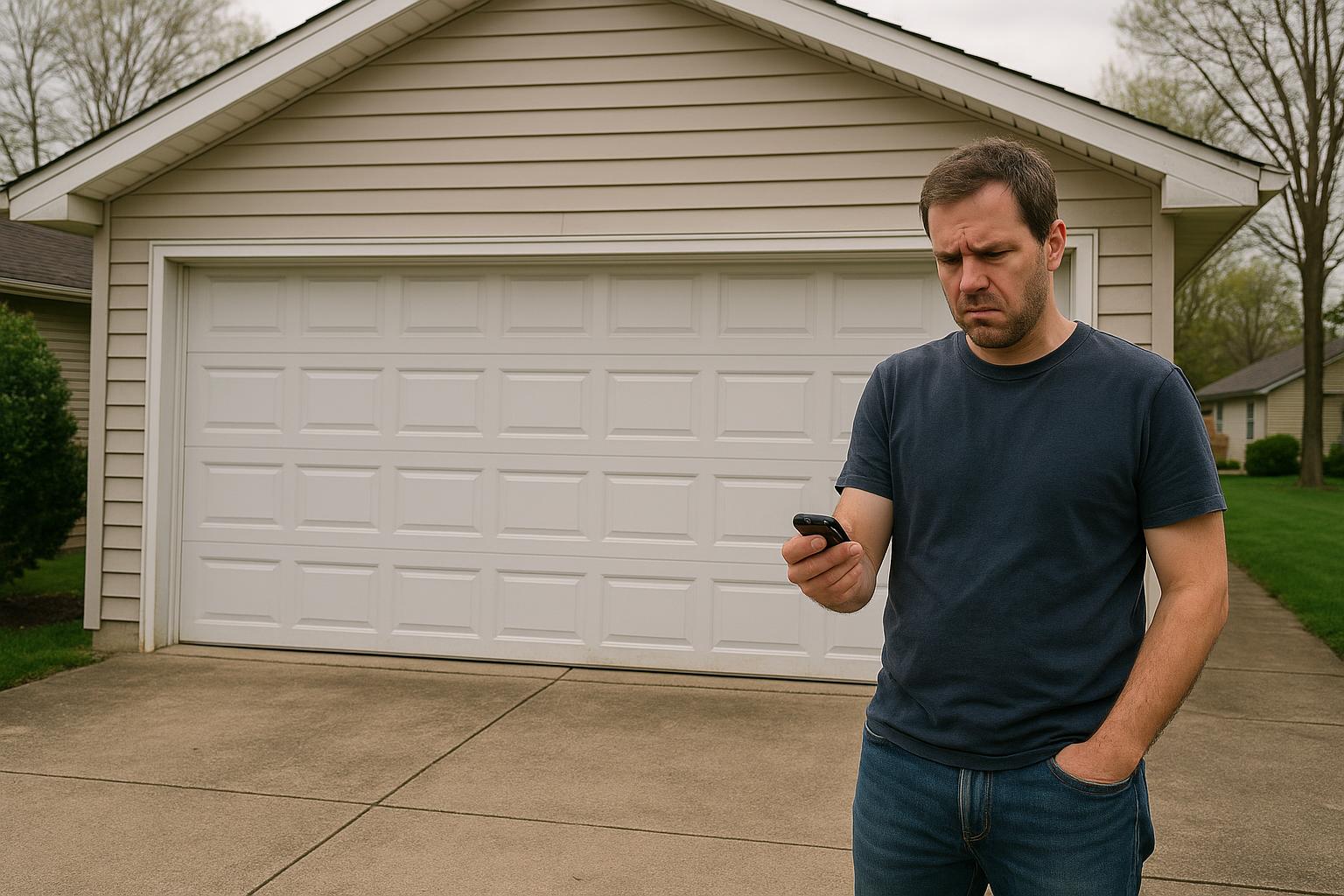
When Your Garage Door Stops Working, Don't Panic
You press the button on your remote or wall panel, and nothing happens. Or maybe the door starts to move and then reverses. A garage door that won't open or close is one of the most common — and most frustrating — problems homeowners in Berwyn face, especially during our harsh Illinois winters when you need reliable access to your garage more than ever.
Before you assume the worst, there are several things you can check on your own. And if those don't solve the problem, knowing when to call a professional can save you time, money, and a lot of stress.
Check the Obvious Things First
It might sound too simple, but many garage door problems come down to small oversights. Start with the basics before moving on to more complex troubleshooting.
1. Make Sure the Opener Is Plugged In
It happens more often than you'd think. Someone bumps the power cord, a circuit trips, or an outlet stops working. Check that your garage door opener is plugged in and that the outlet has power. Try plugging in another device to test the outlet itself.
2. Replace the Remote Batteries
If your wall-mounted button works but your remote doesn't, the fix might be as simple as fresh batteries. Most garage door remotes use standard coin-cell or AA batteries that are easy to swap out.
3. Look for a Locked Door
Many garage doors have a manual lock — a handle or latch on the inside that physically prevents the door from moving. If someone accidentally engaged it, the opener motor will strain but the door won't budge. Disengage the lock and try again.
Inspect the Safety Sensors
Federal law requires all automatic garage door openers manufactured after 1993 to include photo-eye safety sensors. These small devices are mounted near the floor on either side of the door opening, and they prevent the door from closing if something is in the way.
If your garage door opens but won't close, or if it starts to close and then immediately reverses, the sensors are likely the issue. Here's what to check:
- Alignment: The two sensors need to face each other directly. If one gets bumped or shifts, the beam is broken and the door won't close. Look for a steady green light on both units — a blinking light usually means they're misaligned.
- Obstructions: Clear away any boxes, tools, cobwebs, or debris blocking the sensor beam.
- Dirty lenses: Wipe the sensor lenses with a soft cloth. Dust, dirt, and moisture can interfere with the infrared beam.
- Sunlight interference: In some cases, direct sunlight hitting the sensor can trick it into thinking something is blocking the path. A small shade or cardboard shield can help.
Examine the Tracks and Rollers
Your garage door travels along metal tracks on either side of the opening. Over time, these tracks can become misaligned, bent, or clogged with debris. If the door gets stuck partway or moves unevenly, take a close look at the tracks.
- Look for visible bends, dents, or gaps between the track and the wall.
- Check that the rollers are seated properly in the tracks and aren't cracked or worn.
- Remove any buildup of dirt, leaves, or small objects that may have gotten lodged in the track.
Minor debris can be cleaned out easily, but if you notice bent tracks or damaged rollers, it's best to have a technician handle the repair. Forcing a door along a damaged track can cause further harm to the entire system.
Check the Disconnect Switch
Every garage door opener has an emergency release cord — usually a red handle hanging from the opener rail. This cord disconnects the door from the opener so you can operate it manually during a power outage.
If someone pulled this cord and forgot to re-engage it, the opener motor will run but the door won't move. To reconnect, simply pull the cord back toward the opener or run the opener until the trolley reconnects with the door attachment. Your owner's manual will have specific instructions for your model.
When the Problem Is More Serious
If you've gone through the basic checks and your garage door still isn't working, the issue likely involves a component that requires professional attention. Here are some common culprits:
Broken Springs
Garage door springs bear the full weight of the door and are under extreme tension. When a spring breaks, the opener usually can't lift the door at all. You might hear a loud bang when the spring snaps. Never attempt to replace garage door springs yourself — this is one of the most dangerous DIY repairs a homeowner can attempt.
Stripped Gears in the Opener
If you hear the motor running but the door doesn't move, the internal gears in the opener may be stripped or worn out. This is common in older units and typically requires a gear replacement or a new opener altogether.
Damaged Cables
The lifting cables work alongside the springs to raise and lower the door smoothly. Frayed, loose, or broken cables can cause the door to hang crookedly or refuse to move. Like springs, cables are under significant tension and should only be handled by a trained technician.
Electrical or Logic Board Issues
Sometimes the problem is inside the opener unit itself. A faulty circuit board, wiring issue, or failed capacitor can prevent the opener from responding to commands. These issues require diagnostic tools and expertise to resolve safely.
Seasonal Considerations for Berwyn Homeowners
Living in the Berwyn area means dealing with temperature extremes that can directly affect your garage door's performance. In winter, metal components contract, lubricant thickens, and weatherstripping can freeze to the ground. In summer, heat can cause expansion and affect sensor alignment.
A few seasonal tips to keep your door running smoothly:
- Apply a silicone-based lubricant to springs, rollers, and hinges at least twice a year.
- Check weatherstripping along the bottom of the door and replace it if it's cracked or brittle.
- Test the balance of your door seasonally by disconnecting the opener and lifting the door manually. It should stay in place when opened halfway. If it doesn't, the springs may need adjustment.
Know When to Call a Professional
Some garage door issues are safe and straightforward to troubleshoot on your own. But anything involving springs, cables, tracks, or the opener's internal components should be left to experienced technicians. Attempting these repairs without proper training and tools can result in serious injury or further damage to your door system.
At Berwyn Garage Door, we help homeowners and businesses across Berwyn, Cicero, Riverside, Brookfield, and surrounding communities get their garage doors back on track quickly. Whether it's a simple sensor adjustment or a complete opener replacement, we provide honest assessments and fair pricing so you know exactly what you're paying for.
If your garage door isn't cooperating and you've exhausted the easy fixes, give us a call. We offer fast response times and emergency service for those situations that just can't wait.