
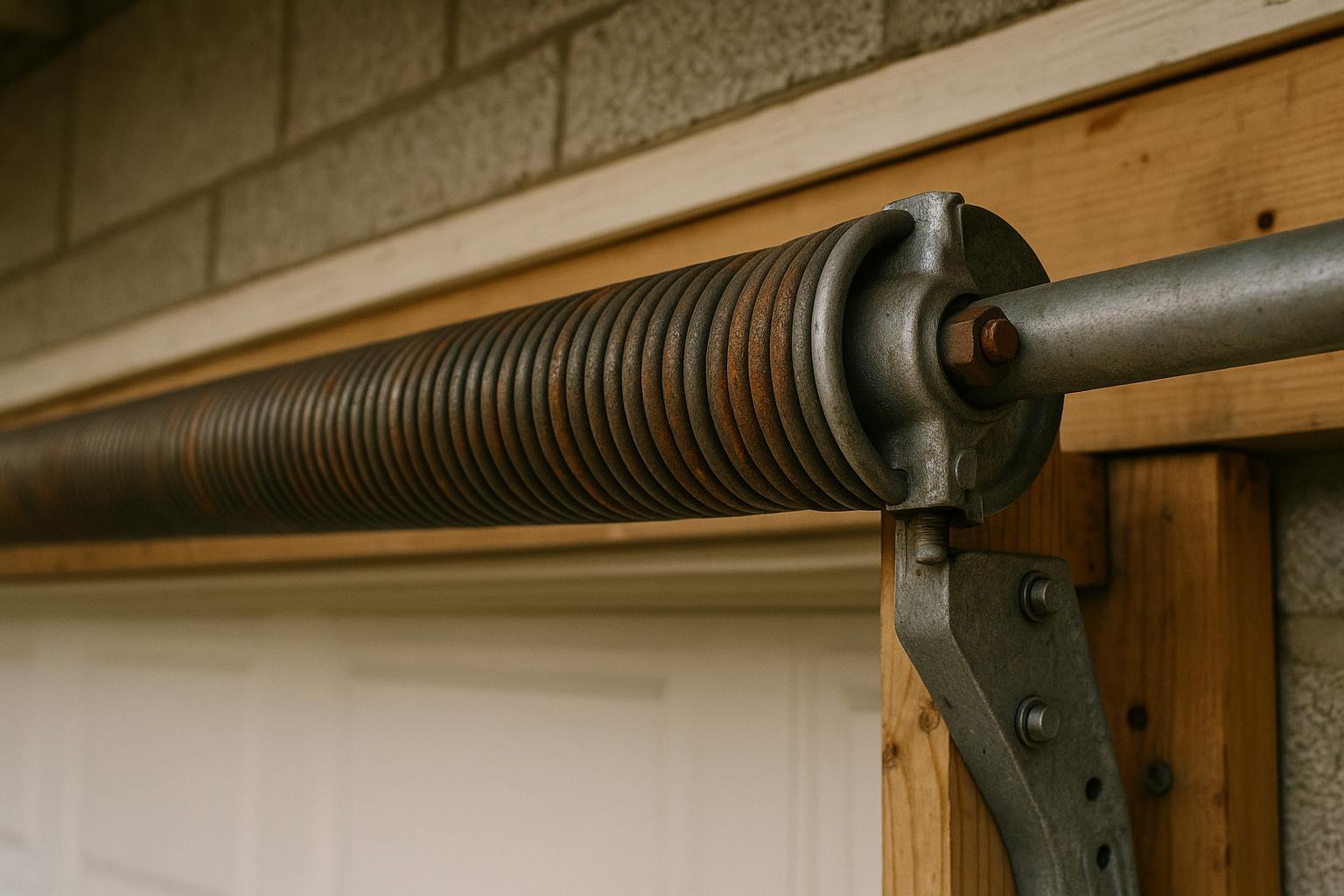
Your Garage Door Springs Are Working Harder Than You Think
Every time you open or close your garage door, the springs do the heavy lifting — literally. A standard garage door can weigh anywhere from 130 to 350 pounds, and the springs are responsible for counterbalancing all of that weight. Most homeowners in Berwyn use their garage doors multiple times a day without ever thinking about the springs. But like any mechanical component under constant stress, they wear out over time.
The good news is that garage door springs rarely fail without warning. There are usually clear signs that they're nearing the end of their lifespan. Knowing what to look for can save you from getting stuck with a door that won't open, or worse, a dangerous situation when a spring snaps unexpectedly.
Understanding the Two Types of Garage Door Springs
Before we get into the warning signs, it helps to know which type of springs your garage door uses:
- Torsion springs are mounted on a metal shaft above the garage door opening. They twist and unwind to raise and lower the door. These are the most common type found in homes across Berwyn, Cicero, and surrounding neighborhoods.
- Extension springs run along the horizontal tracks on both sides of the door. They stretch and contract to assist with door movement. These are more common on older or lighter doors.
Both types have a limited cycle life — typically around 10,000 cycles, with one cycle being a single open-and-close. For a household that uses the garage door four times a day, that works out to roughly seven to ten years of use.
7 Warning Signs Your Springs Are Failing
1. The Door Feels Heavier Than Usual
If you disconnect the automatic opener and try to lift the door manually, it should move relatively easily. A door that feels extremely heavy or barely budges is a strong indicator that the springs have lost tension and are no longer doing their job properly.
2. The Door Opens Unevenly or Crooked
When one spring weakens faster than the other — especially with extension spring systems — the door may rise unevenly. One side lifts while the other lags behind, causing the door to look crooked in the tracks. This puts extra strain on the opener, cables, and tracks, potentially leading to more expensive repairs down the road.
3. You Hear Loud Squeaking or Grinding
Some noise is normal, but if your garage door has started making loud squeaking, popping, or grinding sounds that weren't there before, the springs could be the culprit. Worn springs lose their smooth operation and can create metal-on-metal friction that's hard to ignore.
4. Visible Gaps in the Spring Coils
Take a look at your torsion spring above the door. A healthy spring has tightly wound coils with consistent spacing. If you notice a visible gap or separation in the coils, the spring has already broken or is on the verge of snapping. This is one of the most obvious signs and requires immediate professional attention.
5. The Door Slams Shut Quickly
A properly functioning spring system controls the speed at which your door closes. If the door drops faster than normal or slams shut, the springs are no longer providing adequate resistance. This is not just an inconvenience — it's a safety hazard, especially for families with children or pets.
6. The Opener Struggles or Stops Mid-Cycle
Your garage door opener is designed to work with the springs, not replace them. When springs weaken, the opener has to work much harder. You might notice the motor straining, the door stopping partway, or the opener shutting off due to the safety force settings being triggered. Many homeowners in Berwyn assume the opener is the problem when it's actually the springs causing the issue.
7. Rust or Corrosion on the Springs
Rust accelerates wear on garage door springs. It increases friction between the coils and weakens the metal over time. If your springs look rusty or corroded, their remaining lifespan is significantly shorter than it would be otherwise. Regular lubrication can slow this process, but heavily rusted springs should be inspected by a professional.
Why You Should Never Replace Garage Door Springs Yourself
We understand the DIY spirit — many homeowners in Berwyn and Brookfield are handy and like to tackle projects around the house. But garage door spring replacement is one job that should always be left to trained technicians. Here's why:
- Extreme tension: Torsion springs are wound under tremendous force. A spring that releases unexpectedly can cause serious injury or even death.
- Specialized tools required: Proper spring replacement requires winding bars, clamps, and precise measurements that most homeowners don't have.
- Incorrect installation risks: Springs that are wound too tightly or not tightly enough will cause the door to malfunction, potentially damaging the opener or the door itself.
Professional spring replacement typically takes less than an hour and ensures the job is done safely and correctly.
How Regular Maintenance Extends Spring Life
You can get more years out of your garage door springs with some basic maintenance habits:
- Lubricate the springs with a silicone-based spray every three to four months. This reduces friction and prevents rust.
- Schedule annual inspections to catch wear before it becomes a failure. A technician can measure spring tension and identify issues early.
- Balance the door periodically by disconnecting the opener and lifting the door halfway. If it stays in place, the springs are balanced. If it falls or rises, they need adjustment.
- Address small problems quickly. A noisy spring or a slightly uneven door is much cheaper to fix now than a full breakdown later.
At Berwyn Garage Door, we include spring inspection as part of every maintenance visit. Many of our customers in Riverside, Lyons, and North Riverside schedule annual tune-ups to stay ahead of problems and avoid emergency calls.
What to Do If a Spring Breaks
If you hear a loud bang from your garage — almost like a firecracker — and your door won't open, a spring has likely snapped. Here's what to do:
- Do not try to open the door manually or with the opener. The door is extremely heavy without spring support and could fall.
- Disconnect the opener by pulling the emergency release cord to prevent the motor from burning out.
- Call a professional for repair. We offer emergency garage door service for exactly these situations and can typically respond the same day.
Don't Wait for the Snap
A broken garage door spring is one of the most common repair calls we get, and in most cases, the homeowner noticed warning signs weeks or even months before the spring finally gave out. Paying attention to how your door sounds, moves, and feels can help you catch a failing spring before it becomes an emergency.
If you've noticed any of the signs we've described, or if your springs are approaching the ten-year mark, give Berwyn Garage Door a call. We'll inspect your springs, give you an honest assessment, and handle the replacement quickly so you can get back to your routine without worry.